Do You Need Mirrors in Newburg, NY?
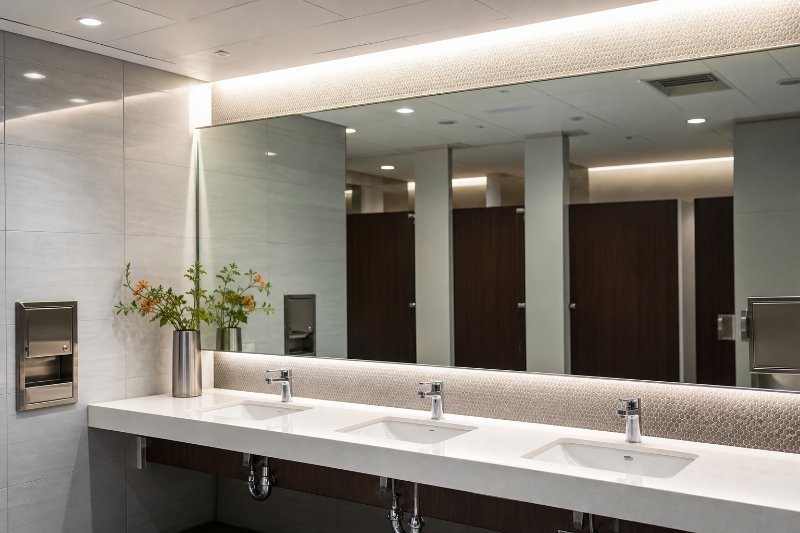
A mirror can make a room feel larger, brighter, and more finished. Yet choosing one is not as simple as picking a size and hanging it on the wall. Glass thickness, edge style, mounting hardware, lighting, wall condition, and safety all affect the final result.
Shelf provides professionally measured and installed mirrors in Newburg, NY, for residential and commercial spaces. As a Construction Division 10 finishes team, the focus goes beyond appearance. Every installation must fit correctly, remain secure, and support the way the room is used.
That attention matters throughout the Hudson Valley, where building ages, wall materials, and room layouts vary widely. A precise installation protects the glass, the wall, and the fixtures around it. It also helps prevent expensive corrections later.
What Goes Into a Well-Planned Mirror Installation
A mirror is both a design feature and a functional building component. Good planning starts with the wall, not the glass. The installer must understand what is behind the finished surface, where nearby fixtures sit, and how people will interact with the mirror.
Accurate field measurements
Small measurement errors become obvious once glass is installed. Walls may appear square while being slightly out of level or plumb. Vanities, backsplashes, outlets, light fixtures, and ceiling lines can also vary.
Professional field measurements account for:
- The exact width and height of the available wall area
- Gaps needed around cabinets, trim, tile, and fixtures
- Out-of-square corners
- Electrical outlets and switches
- Faucet and backsplash placement
- Door swings and cabinet clearance
- Required mounting space
For a Newburg, NY mirror project, measuring after permanent finishes are installed is often the safest approach. Tile, countertops, trim, and cabinets can change the usable dimensions. Ordering glass from an early plan alone may produce gaps, interference, or a mirror that simply does not fit.
Glass thickness and mirror size
Mirror thickness affects rigidity, appearance, weight, and installation requirements. Thin glass may be acceptable for smaller framed pieces. Larger wall-mounted mirrors generally benefit from thicker material because it stays flatter and feels more substantial.
The correct specification depends on:
- Overall dimensions
- Framed or frameless design
- Mounting method
- Wall construction
- Expected use
- Local safety requirements
Bigger is not automatically better. A large mirror can overpower a compact bathroom or interfere with lighting. The right proportions should relate to the vanity, wall, ceiling, and surrounding accessories.
Edge treatments and visual style
Exposed edges need a finished treatment. Common options include polished edges and beveled edges.
A polished edge is smooth, clean, and versatile. It works well in contemporary bathrooms, fitness spaces, dressing areas, and commercial interiors. A beveled edge creates an angled border that catches light and adds a more decorative appearance.
Framed mirrors provide another option. Frames can coordinate with cabinetry, door hardware, plumbing fixtures, or other interior finishes. Frameless installations tend to feel lighter and can make a small room appear less crowded.
How to Choose the Right Mirror for Each Space
The room’s purpose should guide the selection. A bathroom mirror handles different conditions than a closet mirror, decorative wall mirror, or fitness-room installation.
Bathroom and vanity mirrors
Bathroom mirrors should support grooming without creating awkward shadows or sightlines. Width is often coordinated with the vanity, but an exact match is not mandatory. A slightly narrower mirror can create visual breathing room, while a full-width design offers more reflective area.
Consider these details before ordering:
- Will sconces sit beside the mirror or above it?
- Is there enough clearance above the faucet?
- Can medicine cabinet doors open freely?
- Does the user need seated accessibility?
- Will reflected light cause glare?
- Is the wall exposed to regular moisture?
Custom mirrors in Newburg, NY, can be cut around outlets, switches, or architectural features when the design requires it. Those cutouts need exact dimensions and suitable spacing from glass edges. Improvised field modifications are risky and may crack the mirror.
Closets and dressing areas
Full-length mirrors are useful in walk-in closets, dressing rooms, bedroom walls, and closet doors. Placement should allow the user to step back far enough to see a complete reflection.
A mirror near Closet Shelving also requires clearance planning. Drawers, baskets, doors, and pull-out accessories must operate without striking the glass. Coordinating both components before installation creates a cleaner and more practical layout.
For door-mounted applications, weight matters. The door, hinges, and hardware must be able to carry the added load. Adhesive alone may not be appropriate for every door material or mirror size.
Commercial and shared-use spaces
Commercial mirrors may appear in restrooms, gyms, salons, fitting areas, multifamily buildings, and common spaces. These projects often require repeated dimensions, durable mounting systems, and close coordination with other trades.
Accessibility also matters. Mounting heights and reflective viewing areas may need to accommodate different users. Project drawings and applicable code requirements should be reviewed before fabrication. This is especially important for mirrors for Newburg, NY properties that serve employees, tenants, customers, or the public.
Materials, Mounting Methods, and Safety Details
A mirror should not only look secure. It should be attached with materials that are compatible with the glass backing and the wall surface.
Mirror adhesive and mechanical support
Specialized mirror mastic is designed to bond mirror glass without damaging its reflective backing. General construction adhesive may contain chemicals that cause dark spots, clouding, or eventual bond failure.
Depending on the application, installers may use:
- Mirror mastic
- Bottom channels
- Metal clips
- Decorative standoffs
- Framing systems
- Concealed mechanical supports
Some installations combine adhesive with mechanical support. The right method depends on mirror weight, wall type, edge exposure, and design intent.
Fresh adhesive also needs proper curing conditions. Temporary supports may remain in place until the bond has developed. Removing them too early can allow the glass to shift.
Wall preparation
Adhesive cannot compensate for a weak or damaged wall. Loose paint, wallpaper, dust, moisture, and uneven drywall can interfere with bonding. The substrate may need cleaning, repair, priming, or reinforcement.
Tile presents different challenges. Drilling must be planned carefully to avoid cracking. Masonry, concrete, and specialty wall panels require compatible anchors and tools. If plumbing or electrical lines may be hidden behind the surface, their locations should be considered before any fastener is installed.
Safety glazing considerations
Some locations may require safety-backed mirror or another approved safety treatment. The goal is to reduce the risk associated with broken glass. Requirements can depend on placement, occupancy type, size, and proximity to doors or other hazardous areas.
A qualified project team should review applicable plans and codes rather than assume every mirror follows the same rule. This is especially relevant in public, institutional, hospitality, and multifamily settings.
Common Mirror Planning Mistakes to Avoid
Most mirror problems begin before installation. A few careful decisions can prevent poor alignment, damaged finishes, and replacement costs.
Ordering before finishes are complete
Plans provide a useful starting point, but field conditions control the final fit. Tile thickness, countertop installation, trim changes, and cabinet adjustments can alter dimensions. Final verification helps prevent an oversized or undersized piece.
Ignoring reflected views
A mirror reflects more than the person standing in front of it. It may highlight an open doorway, exposed storage, ceiling vent, or unfinished area. Stand at several positions and consider what will appear in the reflection.
Lighting deserves the same attention. A fixture placed too close to the glass can create glare. Poorly positioned overhead lighting may cast shadows across the face. Side lighting generally offers more even illumination for grooming.
Using household adhesive
Not every product labeled for glass is safe for mirrors. The reflective coating on the back can react with incompatible chemicals. Always use manufacturer-approved mirror adhesive and follow coverage, spacing, ventilation, and curing instructions.
Forcing glass into a tight opening
Glass needs appropriate clearance. If walls shift slightly or surrounding materials expand, a mirror fitted too tightly may chip or crack. Proper gaps can be discreetly incorporated without making the installation look unfinished.
Treating separate finish items as separate decisions
Mirrors, Shower Doors, Bath Accessories, and Closet Shelving often occupy connected spaces. Planning them independently can lead to conflicts. A towel bar may block a shower door. A robe hook may sit where a mirror edge needs support. Closet components may interfere with a full-length panel.
Coordinated Division 10 finish planning reduces these conflicts. It also keeps heights, finishes, and alignments visually consistent.
Questions Property Owners Often Ask
Can a mirror be installed over tile?
Yes. The mounting method must suit the tile, substrate, and mirror size. Any drilling should use appropriate tools and carefully selected locations. Adhesive compatibility remains important.
Can an old mirror be reused?
Sometimes, but removal can damage the backing, edges, or glass. Large mirrors bonded directly to a wall may be difficult to remove intact. Reuse should be evaluated case by case rather than assumed.
Why do black marks appear on mirror edges?
Darkening can result from moisture intrusion, damaged backing, harsh cleaning chemicals, or incompatible adhesive. Keeping edges dry and using suitable cleaning products can help protect the reflective coating.
Spray cleaner onto a soft cloth instead of saturating the mirror. This limits liquid from running behind the edges.
Is professional installation necessary?
A small, lightweight framed mirror may be manageable for an experienced homeowner. Large frameless pieces, custom cutouts, heavy glass, tiled walls, and public-use installations carry greater risk. Professional measuring and mounting are usually worthwhile for Newburg, NY mirrors that require a precise or permanent fit.
When Careful Mirror Planning Pays Off
Take action before ordering glass if the room includes custom cabinetry, tile, unusual angles, multiple fixtures, or accessibility requirements. Early coordination helps establish the design. Final field measurements then confirm the fabrication size.
Professional installation also makes sense when a mirror is large, difficult to handle, or positioned over valuable finishes. Glass can be fragile at the edges even when the face feels strong. Proper transport, lifting, setting, and support protect both the product and the surrounding room.
A well-installed mirror should feel intentional. Edges line up. Reflections make sense. Lighting works. Nearby doors and accessories operate freely. The installation becomes part of the room rather than an object added at the end.
For homeowners, contractors, property managers, and commercial teams across Orange County, Shelf can coordinate mirrors with related finish items for a more reliable result. That includes Closet Shelving, Shower Doors, mirrors, and Bath Accessories.
Clear measurements and coordinated finishes can prevent the most common problems with mirrors in Newburg, NY. For a free estimate tailored to the wall, room, and intended use, call or text Shelf at (845) 564-7400 and share a few details about the project.