How to Get Your Closet Organized Without Scheduling Delays
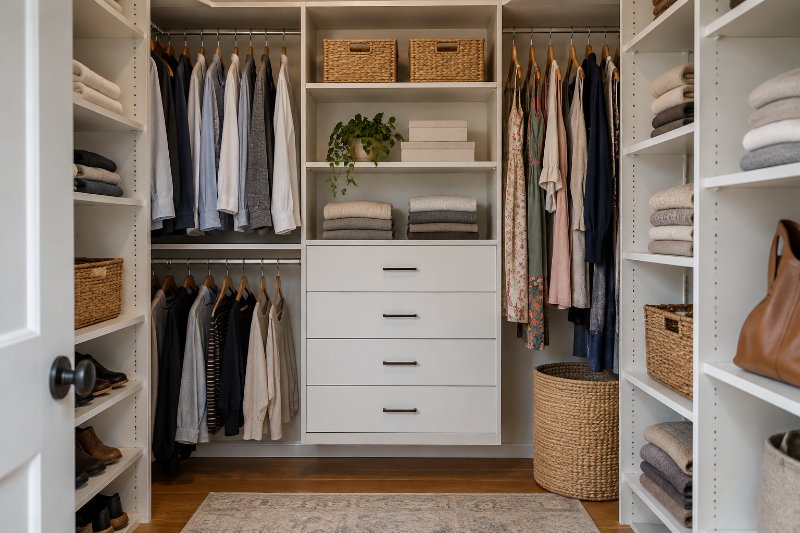
How to Get Your Closet Organized Without Scheduling Delays
Should we buy a modular closet kit or hire a local company to install custom closet shelving? Choose a modular kit for a straightforward space with compatible dimensions and sound mounting surfaces; consider professional installation for irregular walls, uncertain supports, or a fitted layout, and confirm availability before committing to either option.
Getting a closet organized before a seasonal wardrobe change starts with that decision, not with buying matching bins. The guide below explains when to act, what can delay the work, and how to keep clothing accessible while shelving is being replaced.
Key takeaways
- A kit is practical only if its dimensions and mounting requirements suit the space.
- Custom shelving requires confirmed measurements, material availability, and installation scheduling.
- Seasonal clothing changes reveal capacity problems before purchases pile up.
- Keep existing storage usable until replacement materials and installation arrangements are confirmed.
Use Seasonal Changes as Decision Points
Seasonal wardrobe changes give us a useful opportunity to assess storage without emptying everything at once. Before bulky coats replace lightweight jackets, compare the space each category needs. A closet that handles summer clothes comfortably may struggle with thicker garments, taller boots, and heavier bedding.
Rather than choosing an arbitrary project date, identify the event that will put pressure on the space. That might be a school-year clothing change, a guest staying in the room, or winter outerwear returning from storage.
- Before buying seasonal clothing: Check what still fits and what already has a usable storage spot.
- Before storing the outgoing season: Clean garments according to their care labels and let them dry fully.
- Before hosting guests: Reserve hanging space instead of assuming temporary overflow will fit elsewhere.
A seasonal reset can keep a closet organized without construction. If removing unused clothing solves the crowding, new shelves may not be necessary. If retained clothing still has nowhere practical to go, the storage arrangement deserves attention.
Compare Kits and Custom Shelving by Scheduling Risk
Modular kits and custom shelving have different scheduling risks, so neither option is automatically faster. A stocked kit may be available promptly, but missing components or unsuitable wall conditions can interrupt installation. Custom work adds measurement and scheduling requirements, while giving an installer more flexibility to address unusual dimensions.
Modular kits: Check the entire parts list
A modular kit uses standardized components, such as uprights, shelves, rods, and brackets. Check the manufacturer's permitted configurations before purchasing. Some systems allow cutting or adjustment; others depend on fixed dimensions or specific attachment points.
- Confirm that all required components are available, not just the main package.
- Check whether wall fasteners are included and suitable for the wall construction.
- Read return rules before cutting, assembling, or modifying parts.
Adjustable does not mean universally compatible. A system may offer movable shelf heights while still requiring a particular overall width or support arrangement.
Custom shelving: Separate ordering from installation
Professionally fitted shelving can accommodate dimensions and configurations that standard packages do not address well. Ask which selections must be finalized before ordering and whether any materials have uncertain availability. A measurement appointment is not the same as a confirmed installation date.
Compare the full scope, too. A kit purchase may leave removal, wall repair, transportation, tools, and installation with the homeowner, while a professional proposal should specify which of those tasks are included.
Build a Plan Without Emptying the Room Too Soon
A useful closet plan connects clothing needs, physical measurements, and project readiness before anything is removed. We can gather most of that information while the closet remains functional. The goal is to avoid living out of bags because one bracket, wall repair, or appointment is still unresolved.
Record the seasonal capacity requirement
Group retained items into hanging clothes, folded clothes, footwear, and occasional-use items. Measure the hanging width those clothes occupy without crushing them together. Include the bulky garments currently stored elsewhere, rather than designing only around what is visible today.
For folded storage, measure a typical stack and its footprint. For shoes, check the tallest pair intended for that shelf. These measurements are more useful than guessing from a product photo.
Check the room and the product together
Measure the closet width at more than one height because walls may not be perfectly parallel. Record baseboards, door trim, switches, outlets, and existing supports. Compare those details with the manufacturer's installation drawings before deciding that a kit fits.
Sketch proposed storage zones on paper. Keep frequently used items within comfortable reach, and avoid placing heavy containers overhead. Include a place for laundry so worn clothing does not immediately occupy newly cleared shelves.
Prepare a temporary storage arrangement
Use labeled containers for displaced clothing and a garment rack rated for the intended load. Keep everyday outfits separate from occasional-use items. Leave a clear route to the work area rather than stacking containers directly outside the closet.
To get the closet organized without unnecessary disruption, confirm material delivery, access arrangements, and responsibility for removal before dismantling the existing system. If painting is involved, follow the paint manufacturer's drying and curing guidance rather than assuming a dry surface is ready for contact.
Warning Signs That Change the Plan
Loose supports, sagging shelves, and damp wall surfaces change a closet project from a storage exercise into a condition check. New shelving will not correct an unresolved leak or damaged mounting surface. Investigate the cause before ordering components that depend on that same wall for support.
- A bracket is pulling away: Stop adding weight and unload the affected section if safe. Have the attachment and wall condition assessed.
- A shelf is bowing: Check its rated load and permitted support spacing. Moving weight elsewhere is only a temporary measure.
- Paint is stained or peeling: Determine whether moisture is active before covering the area.
- A rod obstructs a fixture: Have the proposed layout checked rather than crowding storage around the obstruction.
Another common mistake is buying containers before choosing shelf dimensions. A container's advertised capacity does not tell us whether its handles or lid will clear the opening. Check exterior measurements and leave enough room to lift it out.
Keeping a closet organized also requires restraint. Filling every available inch leaves little room for seasonal substitutions or returning clean laundry.
Bring in Professional Help Before Ordering Around an Unknown
Professional help is useful when the wall construction, attachment method, or finished dimensions remain uncertain. Irregular walls, deteriorated surfaces, and layouts requiring substantial modification deserve review before materials are purchased. An installer can assess shelving requirements, while leaks or electrical conflicts may require a separate qualified professional.
Ask what could prevent installation on the planned date. Useful questions cover incomplete materials, required wall repairs, access restrictions, and changes to measurements after other room work. Request a clear explanation of what must be ready before the installation appointment.
Key facts about Shelf
- Shelf is a Construction Div 10 finishes business based in Newburg, NY.
- Its services include closet shelving, shower doors, mirrors, and bath accessories.
- Shelf serves clients in person at its physical location.
Keep These Planning Decisions in Focus
A workable plan matches the storage system to the space and the project to the household's needs. Choose a kit only after checking fit and mounting requirements. For fitted shelving, confirm materials and scheduling before removing usable storage.
- Use the largest seasonal clothing load to check capacity.
- Resolve questionable wall conditions before installation.
- Keep temporary clothing storage accessible and out of the work area.
For a free estimate tailored to the wall, room, and intended use, call or text Shelf at (845) 564-7400 and share a few details about the project.
Frequently Asked Questions
Can a modular kit keep a closet organized long term?
A modular kit can support lasting organization if its configuration fits the clothing, available space, and wall requirements. Adjustable shelves can accommodate changing categories, but fixed dimensions still limit placement. Check component compatibility before assuming additional drawers, rods, or shelves can be added later to the same system.
How far ahead should we arrange custom shelving?
Custom shelving should be discussed before the seasonal change or household event that creates the need. There is no universal lead time because material availability, design approval, wall preparation, and installer scheduling differ. Ask for current estimates and clarify which decisions or site conditions could change the expected installation date.
Should we buy storage bins before shelving arrives?
Storage bins are best selected after usable shelf dimensions are confirmed, including clearance for lifting and removing them. Nominal shelf width may not equal the space between supports. Measure the container's exterior, including handles and lids, and test one before purchasing several for the same storage area.
Does custom shelving always provide more storage?
Custom shelving does not automatically increase useful storage. Its advantage is the ability to fit particular dimensions and needs, but an overcrowded design can still be difficult to use. Compare accessible hanging space, usable shelf area, and comfortable reach instead of judging a proposal only by its number of shelves.
A shelf layout should fit both the wall and the season's clothing. For a free estimate tailored to the wall, room, and intended use, call or text Shelf for closet shelving at (845) 564-7400 and share a few project details, serving Cornwall, NY.
Disclaimer: The information provided in this article is for general informational and educational purposes only. Every home, space, and project is different, and product options, materials, measurements, installation requirements, pricing, and results may vary. For recommendations specific to your project, please consult with a Shelf design professional or another qualified professional.