The Frameless Shower Door Mistake That Raises Costs
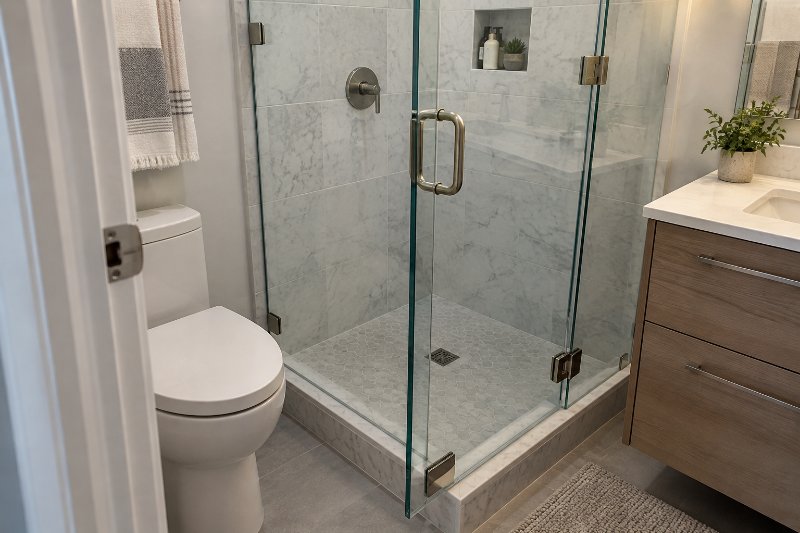
The Frameless Shower Door Mistake That Raises Costs
Frameless shower doors are a good choice when the glass, hardware, and opening suit the bathroom, not just the inspiration photo. The most expensive mistake is ordering a door before confirming how it will open, attach, contain spray, and accommodate the people using it.
Shelf serves Cornwall, NY with shower doors and related bathroom finishes. A useful selection process starts with daily habits: reaching the controls, helping a child bathe, or cleaning behind an overlapping panel. Those details can separate a satisfying purchase from one that needs expensive changes.
Key takeaways
- Compare the usable entry opening, not just the enclosure’s overall width.
- Match glass thickness and door weight to an approved hardware system.
- Review drawings, exclusions, and replacement-part availability before ordering.
- Choose finishes and glass treatments with realistic cleaning expectations.
The First Costly Mistake: Buying the Look Without Testing the Layout
A photograph cannot show whether a door handle strikes the vanity or whether someone can reach the faucet without standing under cold water. Before selecting a style, mark the proposed door movement on the floor with painter’s tape. Include the handle’s projection.
Hinged doors need more than floor clearance
A hinged panel creates an open entry, but its swing must work around toilets, towel bars, and nearby doors. Check the entire moving panel, not only its bottom edge. A projecting countertop can interfere even when the floor looks clear.
- The cost of getting it wrong: A different hinge may not solve the conflict. Changing the panel arrangement can require new glass.
- The better alternative: Approve a drawing showing hinge location, swing direction, handle position, and nearby fixtures.
Sliding doors trade swing space for overlap
A sliding system avoids an outward door arc, but overlapping panels reduce the clear entry width. A product labeled for a 60-inch opening does not provide a 60-inch walk-through. Ask for the actual entry dimension in the selected configuration.
Also check which side opens. A fixed panel in front of the controls can force someone to step into the shower to turn on the water. For tub installations, consider whether the lower guide or track makes bathing a child uncomfortable.
A fixed screen is not automatically an easier substitute
A stationary screen removes moving hardware, but the remaining opening must still contain everyday splash. Showerhead direction, shower depth, and body movement affect where water lands. A handheld sprayer aimed toward the opening can defeat an otherwise sensible layout.
The avoidable cost is buying additional glass after installation, potentially with new supports and a changed entry. Have the proposed screen evaluated as part of the whole shower, rather than treating it as a shorter door.
Paying for Specifications That Do Not Solve Your Problem
Frameless shower doors still use hardware, seals, and sometimes headers or support bars. “Frameless” describes the absence of a full perimeter frame; it does not promise invisible support or a completely open top. Product photographs can make these components difficult to see.
Thicker glass is not always the better upgrade
Many custom hinged systems use 3/8-inch or 1/2-inch tempered glass. Some engineered sliding systems use thinner glass. The correct choice depends on panel dimensions, hardware ratings, and the manufacturer’s design, not a blanket rule that heavier means better.
For the same panel area, 1/2-inch glass weighs about one-third more than 3/8-inch glass. That added weight must be supported by compatible hardware and anchoring. An upgrade that exceeds a hinge’s rating is not an upgrade.
- Avoid: Choosing glass thickness separately from the hardware package.
- Request: Written confirmation that the glass size, thickness, and mounting arrangement work together.
Low-iron glass and protective coatings do different jobs
Low-iron glass reduces the green tint visible in standard clear glass, especially at the edges. It can matter beside bright white tile. It does not prevent water spots or replace cleaning.
A protective coating can make residue easier to remove, but it does not make glass maintenance-free. Compare samples against the actual tile, and ask for the coating’s care instructions before paying for either option.
The financial mistake is purchasing an appearance upgrade to solve a maintenance problem. A squeegee and compatible cleaner may address the daily frustration more directly than a different glass color.
Choosing a Provider by the Bottom-Line Number Alone
Two estimates can describe “glass and installation” while covering different work. One may include removal and disposal; another may leave old anchor holes and damaged tile for someone else. Compare written scope before comparing totals.
For Cornwall, NY clients, a useful estimate should identify the selected configuration and any unresolved site conditions. If wall backing cannot be verified, that uncertainty should be explained rather than hidden behind a firm-looking number.
Look for evidence of a complete design review
- Finished-opening measurements: Width at multiple heights, wall alignment, and curb conditions, not a single rough dimension.
- Mounting details: Where hinges and supports attach, and how required penetrations will be sealed.
- Product identification: Glass specification, hardware model, finish, and applicable safety-glazing information.
- Scope boundaries: Who handles tile repair, backing changes, removal, and disposal.
- Service information: Written warranty terms and a route for ordering replacement seals or rollers.
Ask how the provider handles drawings and approval. A clear drawing gives both parties a shared reference for panel arrangement and hardware locations. A verbal promise that the result will “look like the picture” leaves too much undefined.
Questions That Expose Expensive Assumptions
Good questions reveal whether a proposal fits the room before custom material is fabricated. Tempered glass cannot simply be trimmed or drilled on site like wood. An overlooked hole or incorrect panel dimension can mean remaking the piece.
- “What can change after approval?” Ask which selections become final when fabrication starts and how changes are charged.
- “What happens if existing tile is damaged during removal?” Establish responsibility and whether matching spare tile is available.
- “Where will water seals be visible?” Review sweeps and vertical seals rather than assuming the finished enclosure will have bare edges everywhere.
- “Can this hardware be serviced later?” Obtain manufacturer and model information, particularly for rollers and unusual finishes.
- “Is this handle designed to provide support?” Do not treat a door pull or towel bar as a grab bar.
Red flags include promises of zero maintenance, suggestions to drill tempered glass after delivery, or dismissal of an obvious door collision. Another warning is an estimate that leaves the mounting method undecided while treating the price as final.
Bathroom accessories need coordination, too. A towel bar placed within the swing can become an impact point. A properly specified grab bar needs its own suitable support, not attachment to ordinary shower-door hardware.
What Professional Work Should Leave You With
A professional installation should deliver more than clean-looking glass. Expect a door that operates without scraping, consistent hardware placement, and an explanation of how the enclosure manages splash. Any necessary supports and seals should match the approved design.
Keep approval and care documents
Retain the final drawing, product information, and cleaning instructions together. These records help identify a worn sweep or replacement roller later. They also prevent guessing which cleaner is safe for a specialty finish.
Follow the installer’s stated sealant-curing instructions before using the shower. Cure time varies by product and conditions, so a universal “use it tonight” promise is not dependable.
Check usability, not just appearance
Try the door from both sides and confirm that the handle is comfortable to reach. Ask how to clean overlapping glass and lower guides safely. Do not remove panels or adjust load-bearing hardware without the manufacturer’s instructions and appropriate help.
If glass develops an edge chip, or the door begins contacting tile, stop using it and arrange an assessment. Continuing to force a binding panel risks turning an adjustment problem into broken glass.
Keep These Decisions on Your Approval Checklist
- Confirm the clear entry and door movement with nearby fixtures in place.
- Approve glass, supports, seals, and hardware as one compatible system.
- Separate optional appearance upgrades from necessary structural work.
- Keep written scope, care instructions, and replacement-part details.
Key facts about the business
- A Construction Div 10 finishes business based in Newburg, NY, serving Cornwall, NY.
- Services include shower doors, mirrors, and bath accessories.
- In-person service is available at its physical location.
Frequently Asked Questions
What is a frameless shower door?
A frameless shower door uses glass supported by hinges, clamps, rollers, or other engineered hardware instead of a full surrounding metal frame. Some designs still require a header or support bar. Seals and bottom sweeps may also be needed to control water around the moving panel.
Why are frameless shower doors so expensive?
Frameless shower doors can cost more because the glass and hardware must form a compatible system without a full perimeter frame. Custom shaping, polished edges, hardware cutouts, and careful fitting add work. Larger panels, specialty finishes, difficult access, and necessary repairs can increase the installed price further.
How do doorless showers keep water off the floor?
Doorless showers manage splash through layout, adequate depth, screen placement, showerhead direction, and a properly designed sloped, waterproofed shower floor. They are not guaranteed to keep every drop inside. An opening close to the spray may need a different screen arrangement or a door to contain water reliably.
Can shower doors be replaced without replacing the shower?
Shower doors can often be replaced while keeping the existing tile or shower base, provided those surfaces remain sound and compatible with the new mounting requirements. Old screw holes, concealed damage, and unsupported mounting locations can complicate replacement. The existing opening needs assessment before a replacement system is ordered.
A door that clears the vanity and gives you a comfortable entry starts with the right layout. For a free estimate tailored to your walls, bathroom layout, and intended use, call or text Shelf at (845) 564-7400 and share a few details about your project. You can also review the company’s shower door and bathroom finish services as you prepare your questions.
Disclaimer: The information provided in this article is for general informational and educational purposes only. Every home, space, and project is different, and product options, materials, measurements, installation requirements, pricing, and results may vary. For recommendations specific to your project, please consult with a Shelf design professional or another qualified professional.